


Cialis® (Tadalafil)
Cialis® is the brand name for tadalafil, a medication used to treat erectile dysfunction. It works by relaxing blood vessels and improving blood flow to support erectile response during sexual arousal. Its effects can last up to 36 hours, allowing for greater spontaneity.
*Prescription required. Results may vary. For additional information, see product information.
On-demand (10mg or 20mg): Take at least 30 minutes before anticipated sexual activity. Cialis® can be taken with or without food. Do not take more than one dose in 24 hours.</p>
<p>Daily (2.5mg or 5mg): Take once per day at approximately the same time each day, regardless of sexual activity.</p>
<p>Sexual stimulation is required for the medication to be effective. Your physician will determine the appropriate dose and regimen based on your health history, current medications, and clinical evaluation.
Cialis® is a prescription medication that requires appropriate medical screening, especially for patients with heart conditions, blood pressure concerns, or medications that may interact with tadalafil.
Common side effects can include headache, indigestion, back pain, muscle aches, nasal congestion, flushing, and pain in the arms or legs.
Some side effects require urgent attention. Seek emergency medical care if you experience chest pain, a sudden drop in blood pressure, fainting, sudden vision loss, sudden hearing loss, or an erection lasting more than four hours. Do not take Cialis® with nitrates or guanylate cyclase stimulators, as these combinations can cause blood pressure to drop to unsafe levels.
You are encouraged to report negative side effects of prescription products:
- Contact FDA MedWatch at 1-800-FDA-1088 or visit www.fda.gov/medwatch
All medications require a consultation with a licensed physician who will determine if treatment is appropriate based on your labs and medical history.
Important Safety Information
Important Safety Information — Cialis® (tadalafil)
What is this?
This Important Safety Information summarizes key warnings, precautions, contraindications, and possible side effects for Cialis® (tadalafil), a prescription medication indicated for the treatment of erectile dysfunction, the signs and symptoms of benign prostatic hyperplasia, and erectile dysfunction with benign prostatic hyperplasia.
This page does not include all possible information about Cialis®. Always follow your prescription label, pharmacy instructions, and the instructions provided by your ATHS healthcare provider.
Cialis® is a phosphodiesterase type 5, or PDE5, inhibitor. Sexual stimulation is required for Cialis® to help produce an erectile response.
Who should not take Cialis®?
Do not take Cialis® if you use any form of organic nitrate medication, either regularly or occasionally. Taking Cialis® with nitrates can cause blood pressure to suddenly drop to an unsafe level, which may result in dizziness, fainting, heart attack, or stroke.
Do not take Cialis® if you have had a known serious hypersensitivity reaction to tadalafil, Cialis®, or Adcirca®. Serious hypersensitivity reactions have been reported, including Stevens-Johnson syndrome and exfoliative dermatitis.
Do not take Cialis® with guanylate cyclase stimulators, such as riociguat. Taking Cialis® with these medications may cause blood pressure to drop to an unsafe level.
Cardiovascular warning
Sexual activity carries a degree of cardiac risk, especially in patients with preexisting cardiovascular disease. Cialis® should not be used by patients for whom sexual activity is inadvisable because of their cardiovascular status.
Tell your provider if you have a history of heart attack, stroke, chest pain, heart failure, abnormal heart rhythm, low blood pressure, uncontrolled high blood pressure, or other cardiovascular conditions.
Cialis® is not recommended for patients who have had a heart attack within the last 90 days, unstable angina or chest pain during sexual intercourse, New York Heart Association Class 2 or greater heart failure within the last 6 months, uncontrolled arrhythmias, low blood pressure, uncontrolled high blood pressure, or a stroke within the last 6 months.
If you experience chest pain after taking Cialis®, seek immediate medical attention. Do not take nitrates unless directed by a healthcare professional in a medically supervised emergency setting.
Blood pressure effects
Cialis® can cause mild decreases in blood pressure. This may be more concerning in patients with cardiovascular disease or patients taking medications that lower blood pressure.
Use caution when taking Cialis® with alpha-blockers, blood pressure medications, or substantial amounts of alcohol, because these combinations may increase the risk of dizziness, fainting, low blood pressure, headache, or changes in heart rate.
Prolonged erection
Rare cases of prolonged erections lasting more than 4 hours and priapism, which is a painful erection lasting more than 6 hours, have been reported with this class of medications.
An erection lasting more than 4 hours requires emergency medical attention. If not treated promptly, priapism can cause permanent damage to erectile tissue.
Use Cialis® with caution if you have a condition that may predispose you to priapism, including sickle cell anemia, multiple myeloma, leukemia, Peyronie’s disease, or anatomical deformation of the penis.
Vision changes
Stop taking Cialis® and seek medical attention right away if you experience sudden loss of vision in one or both eyes. This may be a sign of non-arteritic anterior ischemic optic neuropathy, or NAION, a rare condition that can cause decreased vision or permanent vision loss.
Use Cialis® with caution if you have a history of NAION or risk factors for this condition. Cialis® is not recommended for patients with known hereditary degenerative retinal disorders, including retinitis pigmentosa.
Hearing changes
Stop taking Cialis® and seek prompt medical attention if you experience sudden decrease or loss of hearing. This may occur with ringing in the ears or dizziness.
Possible side effects
The most common side effects of Cialis® include headache, indigestion, back pain, muscle aches, nasal congestion, flushing, and pain in the arms or legs.
Other reported side effects include upper respiratory tract infection, cough, diarrhea, urinary tract infection, gastroesophageal reflux disease, abdominal pain, nausea, vomiting, joint pain, muscle spasm, dizziness, fatigue, swelling, low blood pressure, palpitations, rapid heartbeat, chest pain, rash, itching, sweating, blurred vision, eye pain, changes in color vision, ringing in the ears, and spontaneous or increased erections.
Back pain or muscle aches may occur 12 to 24 hours after taking Cialis® and usually resolve within 48 hours. Contact your provider if pain is severe, persistent, or concerning.
Serious reported adverse events
Serious cardiovascular and cerebrovascular events have been reported after tadalafil use, including heart attack, sudden cardiac death, stroke, chest pain, palpitations, and rapid heartbeat. Many, but not all, of these patients had preexisting cardiovascular risk factors.
Serious hypersensitivity reactions have been reported, including hives, Stevens-Johnson syndrome, and exfoliative dermatitis. Other postmarketing reports include migraine, seizure and seizure recurrence, transient global amnesia, visual field defect, retinal vein occlusion, retinal artery occlusion, sudden hearing decrease or loss, and priapism.
Drug interactions
Tell your provider about all medications you take, including prescription medications, over-the-counter medications, vitamins, and supplements.
Do not take Cialis® with nitrates in any form. Do not take Cialis® with guanylate cyclase stimulators such as riociguat.
Cialis® may increase the blood-pressure-lowering effects of alpha-blockers, antihypertensive medications, and alcohol. Caution is advised when Cialis® is used with these medications or substances.
Cialis® is not recommended in combination with alpha-blockers for the treatment of benign prostatic hyperplasia because the combination may lower blood pressure and the effectiveness of the combination has not been adequately studied.
Certain medications can increase tadalafil exposure, including potent CYP3A4 inhibitors such as ketoconazole, ritonavir, itraconazole, erythromycin, and grapefruit juice. Dose adjustment may be required.
Certain medications can decrease tadalafil exposure, including CYP3A4 inducers such as rifampin, carbamazepine, phenytoin, and phenobarbital.
Do not take Cialis® with other PDE5 inhibitors or other erectile dysfunction therapies unless specifically directed by your healthcare provider.
Alcohol
Substantial alcohol consumption while taking Cialis® may increase the risk of low blood pressure symptoms, including dizziness, headache, increased heart rate, and decreased standing blood pressure.
Bleeding disorders and stomach ulcers
Cialis® has not been administered to patients with bleeding disorders or significant active peptic ulceration. Use in these patients should be based on a careful risk-benefit assessment by a healthcare provider.
Sexually transmitted diseases
Cialis® does not protect against sexually transmitted diseases, including HIV. Use appropriate protective measures to reduce the risk of sexually transmitted infections.
Benign prostatic hyperplasia considerations
Before starting Cialis® for symptoms of benign prostatic hyperplasia, your provider should consider other urological conditions that may cause similar symptoms. Prostate cancer and benign prostatic hyperplasia may exist at the same time.
Kidney or liver impairment
Patients with kidney impairment or liver impairment may require dose adjustment or may not be appropriate candidates for certain Cialis® dosing schedules.
Cialis® for once daily use is not recommended in patients with severe kidney impairment or end-stage renal disease on hemodialysis. Cialis® is not recommended in patients with severe liver impairment.
Pregnancy and breastfeeding
Cialis® is not indicated for use in females. There are no data with Cialis® use in pregnant women to inform drug-associated risks for adverse developmental outcomes.
It is not known whether tadalafil or its metabolites are present in human milk, affect a breastfed child, or affect milk production.
Use in pediatric or geriatric patients
Cialis® is not indicated for use in pediatric patients. Safety and effectiveness in patients under 18 years of age have not been established.
No dose adjustment is required based on age alone, but greater sensitivity to medications in some older adults should be considered.
Missed Dose
If you miss a dose, follow the instructions on your prescription label or contact your healthcare provider or pharmacy.
Do not take extra Cialis® to make up for a missed dose. Do not change your dosing schedule without medical direction.
Overdose
In cases of overdose, adverse events are expected to be similar to those seen at lower doses. Hemodialysis contributes negligibly to tadalafil elimination.
In case of overdose or accidental exposure, seek medical attention immediately or contact Poison Control at 1-800-222-1222.
Storage
Store Cialis® at 25°C / 77°F, with excursions permitted to 15°C to 30°C / 59°F to 86°F.
Keep out of reach of children.
In general:
- Store medication according to the instructions on the prescription label.
- Keep medication away from excessive heat, moisture, and direct light.
- Keep out of reach of children and pets.
- Do not use medication that appears contaminated, discolored, damaged, or otherwise unusual.
Medication Disposal
Do not flush unused medication down the toilet or pour it into a sink or drain unless specifically instructed.
Preferred disposal method:
-
Follow local disposal guidance or ask your pharmacist for instructions.
When to contact your provider
Contact your provider if you experience bothersome headache, indigestion, back pain, muscle aches, nasal congestion, flushing, pain in the arms or legs, dizziness, rash, hearing changes, vision changes, chest symptoms, urinary symptoms, or any side effect that feels unusual or concerning.
Seek emergency medical care
Seek emergency medical care if you experience chest pain, fainting, symptoms of heart attack or stroke, sudden vision loss, sudden hearing loss, severe allergic reaction, severe dizziness, a sudden drop in blood pressure, or an erection lasting more than four hours.
Reporting Side Effects
Tell your healthcare provider if you experience side effects or symptoms that concern you.
You may report suspected adverse reactions to Eli Lilly and Company at 1-800-LillyRx (1-800-545-5979) or to the FDA through MedWatch at 1-800-FDA-1088 or www.fda.gov/medwatch.
Telemedicine Disclosure
This prescription may be issued through telemedicine after review by a licensed healthcare provider. If you experience concerning symptoms, contact your ATHS provider or seek emergency medical care.
Withholding or providing inaccurate information about your symptoms, medical history, medications, substance use, allergies, prior reactions, cardiovascular history, blood pressure, kidney function, liver function, vision history, hearing history, or other relevant health information may result in serious harm.
Disclaimer
This information is not comprehensive and does not include all possible risks, side effects, interactions, warnings, or precautions associated with Cialis®. This page does not provide medical advice, diagnosis, or treatment.
For questions about your medication, prescription, dosing, side effects, or treatment plan, contact your healthcare provider or pharmacist.
For complete prescribing information, refer to the Cialis® Full Prescribing Information.
What to Know About Cialis®
Key information for patients considering treatment.
Why Cialis® with ATHS?
Because effective treatment should be accessible from home and backed by real clinical oversight.
- No mandatory subscription plans
- Dispensed by a licensed U.S. pharmacy
- HSA / FSA eligible

Sexual Health Treatments for Men

Bremelanotide (PT-141)
A synthetic peptide and melanocortin receptor agonist that acts on neural pathways in the central nervous system involved in sexual function.

Cialis® (Tadalafil)
Cialis®, is a long-acting medication for erectile dysfunction with effects that can last up to 36 hours.

Compounded Sildenafil
A chewable compounded formulation of sildenafil, a PDE5 inhibitor.
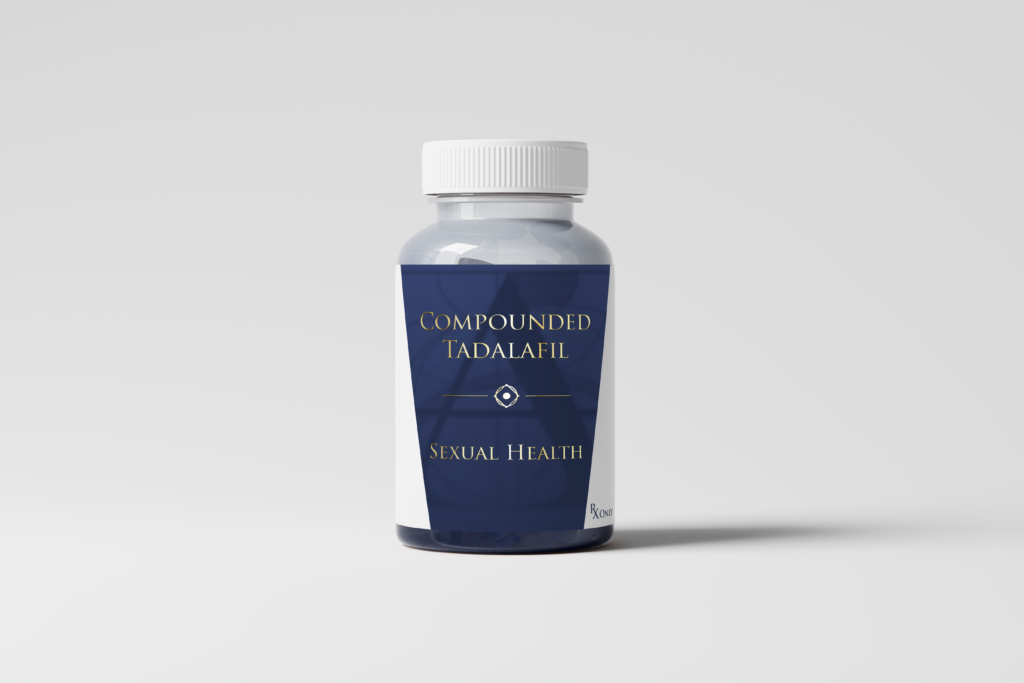
Compounded Tadalafil
A chewable compounded formulation of tadalafil, a PDE5 inhibitor.

Sildenafil (Generic Viagra)
A prescription medication used to treat erectile dysfunction by improving blood flow.

Tadalafil (Generic Cialis®)
A prescription medication for erectile dysfunction that helps improve blood flow and can remain effective for up to 36 hours.

Viagra® (Sildenafil Citrate)
Viagra® is a short-acting medication FDA approved for erectile dysfunction, with effects that can last up to 4 hours.
Important: Compounded preparations are not FDA approved. The FDA does not evaluate compounded products for safety, effectiveness, or quality. Not available in all 50 states. Prescription products require an online consultation with a healthcare provider who will determine if a prescription is appropriate.
Cialis® is a registered trademark of Eli Lilly and Company. Alchemical Transformations Health Services, P.C. is not affiliated with or endorsed by Eli Lilly and Company.
Viagra® is a registered trademark of Viatris Inc. Alchemical Transformations Health Services, P.C. is not affiliated with or endorsed by Viatris.
Go beyond what you feel
A single blood panel can show you more about your health than most people ever see.
Starting at $179
Get startedFrom intake to treatment in four steps.
No monthly subscriptions or hidden fees.

Online Assessment
Complete a brief intake covering your health history, current symptoms, and what you are looking to address.

Lab Testing
Select one of our blood work panels and complete your draw at a Quest location near you, or send us labs from the last 3 months. At-home draws are available for an added fee.

Provider Consultation
Your licensed medical provider reviews your results, explains what they mean, and builds your treatment plan for you.

Start Treatment
If treatment is clinically appropriate, your provider prescribes through one of our licensed partner pharmacies and your medications ship directly to your home.
Learn More
Expert insights and educational resources
No blog posts selected. Please select posts in the element settings.
Common questions
Can't find what you're looking for?
