
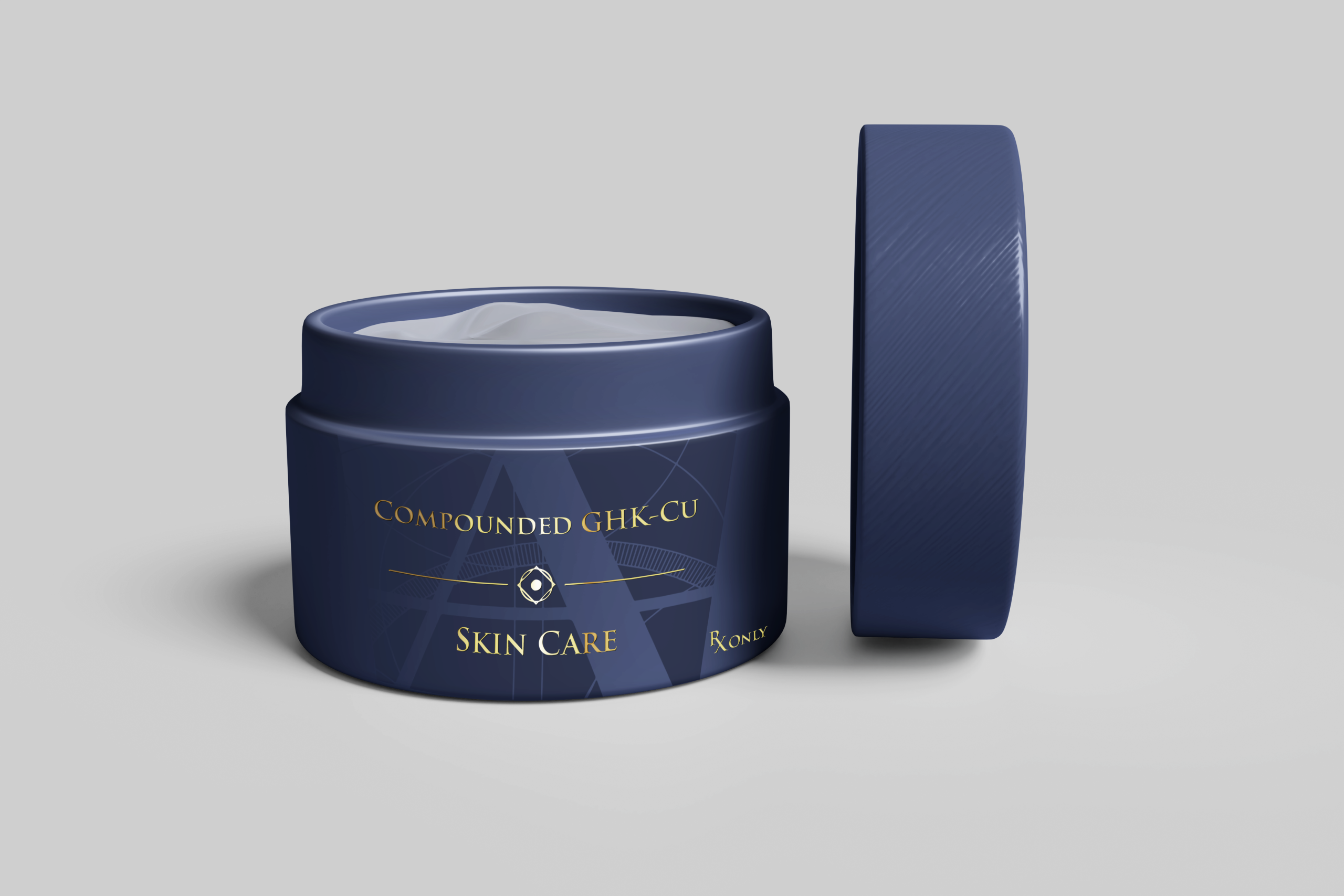
Compounded GHK-Cu (Copper Peptide) Topical (4%)
A compounded topical cream made with GHK-Cu, a copper-bound tripeptide complex derived from GHK, a peptide naturally found in human plasma.
Compounded medications are not FDA-approved and have not been evaluated by the FDA for safety, effectiveness, or quality prior to dispensing
Applied topically to the treatment area as directed by your physician. Frequency, concentration, and application method will be determined based on your clinical evaluation and treatment goals.
Most reactions reported with topical GHK-Cu are local and mild: redness, itching, stinging, or dryness at the application site. Allergic contact reactions are uncommon but possible with any topical peptide preparation. The natural blue color of GHK-Cu can cause temporary bluish tinting of skin or fabric, which is cosmetic.
No systematic clinical study has reported side effect frequencies for topical GHK-Cu. Stop the cream and contact your provider if you develop a spreading rash, persistent swelling, or significant discomfort beyond the application site. Seek emergency care for difficulty breathing or swelling of the face or throat.
You are encouraged to report negative side effects of prescription products:
- Contact FDA MedWatch at 1-800-FDA-1088 or visit www.fda.gov/medwatch
The statements on this page have not been evaluated by the Food and Drug Administration. This product is not intended to diagnose, treat, cure, or prevent any disease.
Important Safety Information
Important Safety Information — Compounded GHK-Cu Topical Cream
What is this?
This document summarizes important safety information for compounded GHK-Cu topical cream. It does not replace the conversation with your provider, the labeling on your prescription, or the instructions provided by your dispensing pharmacy. Read this information before you begin using the cream and keep it for reference during treatment.
If you have questions about your prescription, your application instructions, or any reaction you are experiencing, contact your ATHS provider or the dispensing pharmacy directly.
GHK-Cu is the copper(II) complex of the tripeptide glycyl-L-histidyl-L-lysine. There is no FDA-approved GHK-Cu drug product. Compounded GHK-Cu topical cream is prepared by a licensed compounding pharmacy under Section 503A of the Federal Food, Drug, and Cosmetic Act based on an individual prescription. As a compounded medication, it is not approved by the FDA and has not been evaluated by the FDA for safety, effectiveness, or quality prior to dispensing.
Your provider has determined that compounded GHK-Cu topical cream may be appropriate for you in the context of skin aging. Compounded GHK-Cu is intended for topical (external) application only. Injection of GHK-Cu is not authorized for use in compounding under federal regulations and is not prescribed by ATHS under any circumstance.
Important Warnings and Precautions
- Limited published safety data. No systematic clinical studies of the side effects of topical GHK-Cu have been published, despite decades of cosmetic and dermatologic use. The safety information below is drawn from general topical pharmacology, the small clinical studies of GHK-Cu cream that exist in the dermatologic literature, and standard precautions for cosmetic peptide preparations. Report any reaction or symptom you experience to your provider.
- Application site reactions. Like other topical preparations, GHK-Cu cream can cause local irritation, redness, itching, dryness, or stinging at the site of application. Reactions are typically mild and resolve when the product is discontinued. Stop using the cream and contact your provider if a reaction is severe or persistent.
- Allergic reactions. Allergic contact dermatitis can occur with any topical preparation. If you develop spreading rash, swelling, blistering, or significant discomfort at or beyond the application site, stop the cream and contact your provider. Seek emergency care for difficulty breathing, swelling of the face, lips, tongue, or throat, or other signs of a severe allergic reaction.
- Avoid mucous membranes. Do not apply GHK-Cu cream to the eyes, inside of the nose or mouth, or to genital or anal mucosa. If the cream contacts the eye, rinse thoroughly with water and contact your provider if irritation persists.
- Broken or compromised skin. Apply only to intact skin in the area your provider has directed. Do not apply to active wounds, surgical incisions, severe sunburn, or actively inflamed skin conditions unless your provider has specifically instructed you to do so.
Seek emergency care immediately if you develop signs of a severe allergic reaction, including difficulty breathing, throat tightness, swelling of the face or mouth, or widespread hives.
Who should not use compounded GHK-Cu topical cream?
- Patients with a known hypersensitivity or allergy to GHK-Cu, to other copper peptide complexes, or to any component of the compounded preparation.
- Patients with a documented allergy to copper or copper-containing topical products.
- Patients under 18 years of age. ATHS does not prescribe compounded GHK-Cu topical cream to minors.
If you are uncertain whether you have had a prior reaction to a copper-containing product, discuss this with your provider before starting treatment.
Before using compounded GHK-Cu topical cream, tell your provider if you:
- Have a copper metabolism disorder, such as Wilson disease or any condition associated with abnormal copper handling.
- Have a current or recent skin condition affecting the area where the cream will be applied, such as eczema, psoriasis, rosacea, dermatitis, or active acne flares.
- Have had a recent procedure on the application area, such as chemical peel, laser resurfacing, microdermabrasion, or microneedling. Compromised skin barrier can increase systemic exposure to topically applied substances.
- Are using other topical prescription medications, including retinoids, hydroquinone, corticosteroids, or other compounded preparations, on the same area of skin.
- Are pregnant, planning pregnancy, or breastfeeding.
- Have a history of significant allergic skin reactions to cosmetic or dermatologic products.
Tell your provider about all prescription medications, over-the-counter products, supplements, and recent dermatologic procedures, including those used in the area where the cream will be applied.
Drug Interactions
No formal drug interaction studies have been conducted for topical GHK-Cu. Available pharmacokinetic data indicate that systemic absorption from intact skin is minimal, with less than 0.01% of an applied dose crossing the full epidermis to reach the dermal vasculature in laboratory study (Hostynek et al., 2011). Because of this limited systemic exposure, clinically significant interactions with oral medications are not expected.
The most relevant interactions are local. Concurrent application of other topical agents to the same area, particularly retinoids, exfoliating acids, and compounded preparations containing penetration enhancers, may increase the rate or depth of skin penetration of GHK-Cu and may also increase the risk of local irritation. Tell your provider about all topical products you use on the application area so application timing can be coordinated.
Common Side Effects
No published clinical trial has reported side effects in a structured frequency-ordered table for topical GHK-Cu. The following reactions have been described in the dermatologic literature and in the broader experience with topical peptide and copper-containing preparations:
- Local irritation. Mild redness, warmth, or stinging at the application site, particularly during the first weeks of use.
- Dryness or scaling. Some patients experience transient dryness in the application area.
- Itching. Mild itching at the application site.
- Contact dermatitis. Allergic contact dermatitis is uncommon but possible with any topical preparation containing peptides or metal complexes. Symptoms include persistent redness, swelling, vesicles, or rash extending beyond the application area.
- Skin discoloration. Transient bluish or greenish tinting of the skin or surrounding fabric due to the natural blue color of the GHK-Cu complex; this is a cosmetic effect rather than a tissue change.
Because systematic frequency data are not available, report any reaction to your provider so it can be documented and managed appropriately. Severe, spreading, or persistent reactions warrant prompt provider contact and discontinuation of the cream until reviewed.
Pregnancy, Breastfeeding, and Use in Women
There are no controlled clinical studies of compounded GHK-Cu topical cream in pregnant or breastfeeding women. Available pharmacokinetic data indicate minimal systemic absorption from intact skin, but the safety of topical GHK-Cu during pregnancy and lactation has not been established.
If you are pregnant, planning pregnancy, or breastfeeding, discuss the decision to use or continue this cream with your provider. If you become pregnant while using the cream, contact your provider before continuing treatment.
For breastfeeding patients, do not apply the cream to the chest, breast, or nipple area, and wash hands thoroughly before contact with the infant.
Pediatric Use
Safety and effectiveness of compounded GHK-Cu topical cream in patients under 18 years of age have not been established.
ATHS does not prescribe compounded GHK-Cu topical cream to patients under 18 years of age.
Administration
- Apply only to the areas of intact skin specified by your provider.
- Wash hands before and after application unless the hands are an intended application site.
- Use the amount and frequency directed by your provider. Applying more cream or applying it more frequently than directed will not improve outcomes and may increase the risk of irritation.
- Avoid the eyes, lips, inside of the nose and mouth, and other mucous membranes.
- If applying other topical products to the same area, separate applications by the interval your provider recommends.
Your provider will determine the application schedule appropriate for your skin and your goals. Follow the instructions on your prescription label and the labeling provided by the dispensing pharmacy.
Missed Dose
If you miss a scheduled application, apply the cream when you remember unless it is close to the time of your next planned application. Do not apply a double amount to compensate for a missed application. Resume your usual schedule and contact your provider if you have questions.
Overdose
Overdose from topical application is unlikely given the limited systemic absorption of GHK-Cu through intact skin. If a large quantity of cream is accidentally swallowed, particularly by a child, contact Poison Control at 1-800-222-1222 or proceed to the nearest emergency department.
If excessive amounts have been applied to the skin, wash the area thoroughly with mild soap and water and contact your provider if you experience any reaction.
Storage
Store compounded GHK-Cu topical cream as directed by the dispensing pharmacy. Many GHK-Cu preparations are stored in a cool, dark location, with some formulations requiring refrigeration between 36°F and 46°F (2°C and 8°C). GHK-Cu is sensitive to oxidation and to elevated temperatures, and improper storage can degrade the active ingredient.
Keep the cream tightly closed and away from direct sunlight. Discard the product on or before the beyond-use date provided by the dispensing pharmacy. Keep all medications out of the reach of children and pets.
Medication Disposal
- Do not flush the cream or pour it down a drain unless specifically instructed to do so.
- Use a community drug take-back program when one is available, or follow local disposal guidance for cosmetic and pharmaceutical preparations.
- Ask the dispensing pharmacy if you have questions about disposing of unused cream or empty containers.
Reporting Side Effects
Report side effects you experience to your ATHS provider so they can be documented in your record and managed appropriately. You may also report serious adverse events to FDA MedWatch by calling 1-800-FDA-1088 or by visiting https://www.fda.gov/medwatch.
Telemedicine Disclosure
Your prescription for compounded GHK-Cu topical cream may be issued through telemedicine after review of your information by a licensed healthcare provider. Telemedicine evaluation depends on the accuracy and completeness of the information you provide. Withholding relevant medical history, prior allergic reactions, current medications, or recent procedures may result in serious harm.
Contact your ATHS provider for any concerns about your treatment. Seek in-person evaluation or emergency care for any reaction or symptom that requires prompt assessment.
Disclaimer
This document is not a comprehensive list of all risks, side effects, or precautions associated with compounded GHK-Cu topical cream. It does not replace the clinical judgment of your provider or the labeling provided by the dispensing pharmacy. It is provided for informational purposes and does not constitute medical advice. Direct any questions about your prescription, your skin, or any reaction you are experiencing to your provider or the dispensing pharmacy.
Why GHK-Cu with ATHS?
Because effective treatment should be accessible from home and backed by real clinical oversight.
- No mandatory subscription plans
- Dispensed by a licensed U.S. pharmacy
- HSA / FSA eligible

Skin & Hair Treatments for Men
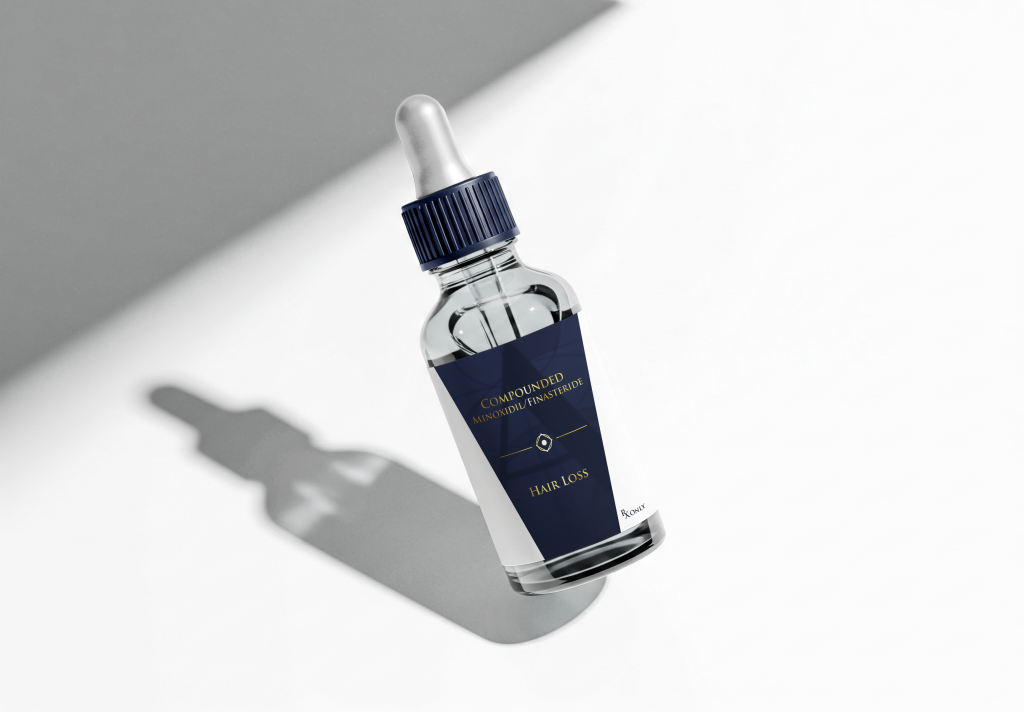
Finasteride & Minoxidil Combination
A topical formulation that combines minoxidil and finasteride in a single scalp-applied treatment.

GHK-Cu (Copper Peptide)
A compounded topical cream made with GHK-Cu (copper peptide).

Glutathione
An injectable tripeptide composed of glutamate, cysteine, and glycine.

Sermorelin
A peptide that mimics growth hormone-releasing hormone (GHRH)
Important: Compounded testosterone preparations are not FDA approved. The FDA does not evaluate compounded products for safety, effectiveness, or quality. Not available in all 50 states. Prescription products require an online consultation with a healthcare provider who will determine if a prescription is appropriate.
Go beyond what you feel
A single blood panel can show you more about your health than most people ever see.
Starting at $179
Get startedFrom intake to treatment in four steps.
No monthly subscriptions or hidden fees.

Online Assessment
Complete a brief intake covering your health history, current symptoms, and what you are looking to address.
Lab Testing
Select one of our blood work panels and complete your draw at a Quest location near you, or send us labs from the last 3 months. At-home draws are available for an added fee.

Provider Consultation
Your licensed medical provider reviews your results, explains what they mean, and builds your treatment plan for you.

Start Treatment
If treatment is clinically appropriate, your provider prescribes through one of our licensed partner pharmacies and your medications ship directly to your home.
Learn More
Expert insights and educational resources
No blog posts selected. Please select posts in the element settings.
GHK-Cu Copper Peptide (Transdermal) FAQ
Can't find what you're looking for?

No sources added. Please add sources in the element settings.